
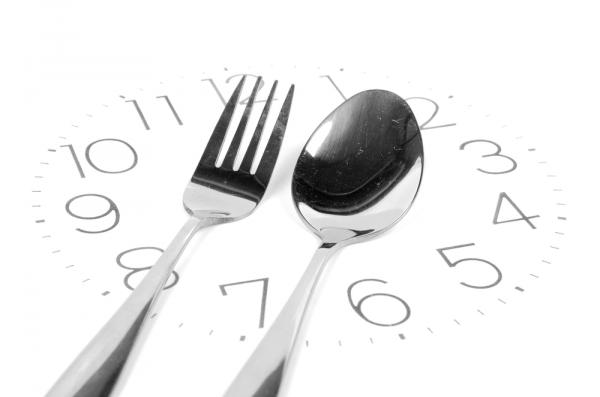
Working a 24 Hour Fast Into Your Diet
I’m sure the idea of a 24 hour fast is frightening for most, and before I ever did one, I felt the same. After writing diets for hundreds of people over the course of 10 years, I’ve found the 24 hour fast to be an effective and sustainable tool for weight loss and management.
Anyone who has lost weight will tell you – maintenance is exceedingly more difficult than dropping the weight. We can explore plenty reasons why, but keeping your weight the same doesn’t involve any inherent “progress,” so that dopamine rush from getting closer to your goal just isn’t there.
Weight loss, weight gain, weight maintenance; it’s all the same thing though. These are simply “problems” that require solutions. In order to do my job well, I need to recognize trends, look through my own client data, and try to find the means and methods that yield the most consistent results.
As I’ve stated a million times, there is nothing inherently magic about performing a fast. I’ll share some interesting research below, but let’s keep it really simple for a minute.
What do people always struggle with?
- Calories are too high (hence weight gain)
- Eating out or in social environments without it wrecking progress
- Controlling their appetite
- Not seeing or feeling enough progress to provide positive reinforcement
What does the 24 hour fast do?
- Provides 24 hours of limited-no food intake (hence lowers weekly calories)
- Provides a buffer for when you do have a day higher in calories
- Suppresses appetite
- People feel/look less bloated
Someone who eats constantly and has higher levels of body fat, is almost always hungry. How is that?
Someone who under eats and has lower levels of body fat, rarely ever seems that hungry. How is that?
Your body adapts to what you consistently do.
We can talk about the what it means to carry extra fat. We can use terms like leptin resistance/sensitivity; insulin resistance/sensitivity; ghrelin resistance/sensitivity. We can talk about Cholecystokinin (CCK) and the blunting of hunger or Neuropeptide Y and the stimulation of hunger…
But all we need to do is understand that your body is constantly adapting itself to its environment. It takes cues from many different sensory & feedback signals. Energy balance provides a strong signal for your body. So when you are deprived of food for long periods of time many “unnecessary” functions are turned down by shifting the precious little available energy to vital functions. Reproduction is turned off for example.
When you have an energy surplus and you gain fat, the body senses that it should keep storing energy. If you the decision maker are continually eating you must be doing so for a good reason. You must be using your brain to figure out that winter is coming and food scarcity will soon be upon you so the body sees all this food coming in and it just stores it.
The fatter you get the fatter the body is willing to allow you to become. When you have stored a weeks worth of survival fat on your belly and hips the body is ready and willing to push for a months worth of fat storage. Getting fatter is a counter prime because the body becomes increasingly adapted to storage.
In the opposite fashion, once you start losing weight and have been consistently eating lower calories, your hunger starts to diminish.
Enter the Fast
Without having to make any other changes, you can simply employ a once a week, 24 hr fast and significantly reduce your weekly calories, become more accustomed to dealing with hunger, and feel less bloated.
24 Hr Fast day
You will fast from dinner to dinner. For example, if you had dinner at 6pm on Wednesday, you would not eat your next meal until Thursday at 6pm. During the “fast” day you can use coffee, bcaa’s, unsweetened drinks if you need. Water, however, is a must during this period as dehydration will not help our cause.
Break your fast with a mixed meal
- Calories – 800-1,250 (this is the range I keep most women/men in and is based on their weight and history dieting)
- Protein – 80-140g
- Carbs – 50-80g
- Fat – 30-45g
Research Findings
One day of food restriction does not result in an increase in subsequent daily food intake in humans. David Levitsky (2010).
There are some who worry that if they go a few hours without food, they will significantly overeat. Unfortunately, for some, this can happen. Others experience quite the opposite, and a fast can help control their hunger. This is why dieting is so individual.
In this study, the researchers examined how one day of food restriction would affect the participants and their food intake in the subsequent days. For four weeks, using all prepared meals, 22 women were fed Monday through Friday. The first week they all ate the same, then on every Monday there were three groups, 1.) ate ad libitum, 2.) ate 1,200 calories, 3.) fasted. Then from Tuesday to Friday they went back to eating ad libitum. What they found was that even after the 24 hour fast there was not an increase in spontaneous food intake amongst the fasted group.
In closing the author’s state, “to sustain weight loss, it is necessary to continually reduce energy intake, perhaps regularly interspersing a day of fasting or food restriction within their weekly food cycle may allow people to maintain their reduced intake and thereby produce a sustained reduction in body weight.”
“Ramadan and Its Effect on Fuel Selection during Exercise and Following Exercise Training” Stephen R. Stannard.
A lot of fasting research comes from studies done on those who participate in Ramadan. The only issue with this type of fasting is the restriction of water or any fluids during their fast. I don’t generally recommend this as dehydration during this period can negatively impact growth hormone release, which is one of the adaptations we are after during a fast.
This study was interested in exploring the short-term physiological adaptations during fasting, one example is the sparing of carbohydrate stores and mobilizing of fats (lipids) to provide fuel for the body. The fast and then reefed model has shown potential in improving the body’s ability to utilize fats for energy.
Some of the interesting quotes from the study include:
- “Short term fasting regularly exposes active tissue to periods of increased lipid (fat) availability and utilization”
- “The results of this study indicate that endurance training undertaken without breaking the overnight fast leads to an increased capacity of the trained muscle to utilize lipid and also store glycogen in the fed state”
- “There is strong evidence that participation in Ramadan promotes the ability of the body to better utilize lipid at rest and during exercise.”
“The effect on health of alternate day calorie restriction: Eating less and more than needed on alternate days prolongs life.” Johnson JB, Laub DR, John S.
The title of this was enough to intrigue me. This study was done on older patients (65+) and featured a modified alternate day fast. The eating pattern was ad lib on one day and then eating 20-50% of the estimated daily calories the following day. After monitoring this for 2.5 years the authors found: Improvement in a variety of disease conditions including insulin resistance, asthma, autoimmune disease, osteoarthritis, menopause related hot flashes, and more. What they conclude was that this style of eating was helpful in weight control, aids in prolonging lifespan and improves health.
“Intermittent versus daily calorie restriction: which diet regimen is more effective for weight loss?” Ka Varady.
This particular study looked at alternate day fasting vs. caloric restriction (15-60% reduction in usual calorie intake) in terms of weight loss. They refer to the alternate day fast as “Intermittent CR”, and it involved 24 hours of ad libitum food consumption followed by 24 hours of complete or partial food restriction. The full study has a ton of great discussion which I recommend reading.
After 3 and 12 weeks, there was similar weight loss and fat mass loss between the daily caloric restriction vs. intermittent CR (or modified alternate day fast). However, “less fat free mass was lost in response to the intermittent CR vs. caloric restriction alone.”

Leave a Reply