

Setting Your Macronutrients
In Part 1: Building The Foundation and Part 2: Are All Calories Created Equal of this series, I discussed picking a goal and finding your starting caloric baseline. In this section I will talk about macronutrient ratios for improved body composition. We have established the role that calories have in the body. Now we will look at where these calories come from. The macronutrients are Proteins, Carbohydrates and Fats. This is where we derive most of our energy from.
Is it all about the Macros?
What are the macronutrients? They are essential amino acids, essential fatty acids, and carbohydrates. Notice how only protein and fats have the word essential in front of them? This is not by accident; these are the two macronutrients we cannot survive without. Hold back your tears; you can actually survive without carbohydrates. The Inuits are famous for their protein/fat only diet (I’m not recommending you eat like an Inuit by the way).
Now, that doesn’t mean that you will feel or perform optimally on zero carbohydrates but it should help you put them in perspective. For a nutrient to be considered “essential” it cannot be synthesized or made in the body and it is necessary for normal bodily functioning. Your body can produce glucose and while glucose is the “preferred” fuel source for the brain and anaerobic exercise, your brain can get by just fine on ketone bodies.
However, I still believe that to achieve peak performance in your sport or lifting endeavor, and to achieve a high level of muscle mass, carbohydrates are extremely important in helping you achieve this. Because of this, you have to find your sweet spot in terms of total carbohydrates and timing them appropriately.
A lot of diets today focus on a certain percentage or ratio of these macronutrients. Low fat diets, the Zone diet (40/30/30), Ketogenic Diet, all play off manipulating the levels of these macronutrients. I don’t believe one is inherently better than the other. Context is key. The goal is to find the set-up most conducive to one’s goals, current metabolic state and lifestyle.
The mistake being made is that some people believe macronutrients are the only thing that matter. This diet is usually referred to as the If It Fits Your Macros diet and I wrote about it here – The IIFYM Conundrum. While they are important, it’s best to avoid generalizations and blanket statements like this. They are important but so are total calories and other factors in nutrition.
Finding Your Ratio
Protein
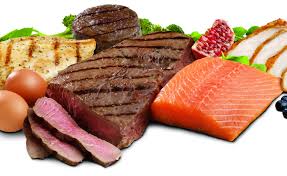
For those who actually have a clue, it’s pretty well established and understood that proper protein is essential in your fat loss or body recomposition quest. I wrote a lengthy article about protein which you can read here – Lower Your Damn Protein.
If you recall from part two, protein has the highest thermic effect of food (roughly 30%). In simple terms this means 30% of the calories ingested as protein will be “lost” due to the energy required to digest and absorb them. Also, protein has positive effects on satiety, increasing lean muscle mass, and can moderate the glycemic response. While some bodybuilders may grossly over-eat protein, the vast majority of people severely under-eat protein.
To keep thing simple I usually advise that you set protein between .8g-1.2g per pound of bodyweight. There are a couple different factors at play here. I will adjust that range based off:
- Amount of lean body mass
- Experience dieting
- Current protein level
- Current goals
- Current metabolic state
The more lean body mass they have, the higher I will likely set the protein. If they are someone who has been eating extremely low levels of protein I certainly wouldn’t jump to 1.2g/lb. As with all things training and nutrition, treat everyone as an individual!
Fats and Carbohydrates
Finding where to set your carbohydrates and fats seem to confuse a lot of people. Dietary fat is not evil and a lot of people who diet will under-eat fats even though they are essential for your health, hormone production and ability to lose fat. Carbohydrates have also gotten a bad reputation lately and it’s due mainly to a complete misunderstanding of the hormone insulin. If you’d like to learn more about carbohydrates and insulin read here – Do Carbohydrate Sources Matter.
Fat
=

A fairly easy and relatively useful formula is to take your weight (let’s say 200lbs) and multiple it by .3-.4. So 200lbs x .4 = 80g fat per day. The 90’s featured the “war on fat” and now that we found out what a horrible idea that was, we have moved onto the “war on carbs”. Hopefully people will soon realize that none of these macronutrients are evil. What’s evil is our lack of activity, generally poor food choices and abundance of calories.
Though here is where it gets tricky. If you follow a low carbohydrate diet, fat will certainly need to be higher than the figure above. Because you’d be restricting carbohydrates, the calories need to be made up elsewhere. For example, Ketogenic diets will usually involve a 4:1 or 3:1 ratio of Fat:Carbs/Protein. So in this scenario, if your diet is 80% fat, you would need to go higher than .3 x your bodyweight for fat intake. The numbers I am giving are for a more balanced approach.
Carbohydrate

Carbohydrate intake on the other hand is more difficult to find your “sweet spot” so to speak. One of the main issues is a lack of insulin sensitivity or insulin resistance. Insulin resistance is correlated with body fat, so the fatter you are, the worse your carbohydrate metabolism. A few ways you can improve insulin sensitivity are by lowering body fat, lowering carbohydrate intake and including periods of low insulin levels in your diet. I advise that when trying to determine carbohydrate intake, make sure to consider a few things.
- How do you feel after a large carbohydrate meal? If you feel tired and run down, this tells you something.
- Is your body fat high? Or are you lean?
- What diets have you had success with in the past? Where were carbohydrates set?
- If you really want to get technical test your fasting blood glucose with a glucometer. Test fasted blood glucose and in intervals after meals or certain foods.
- What is your activity level? Inactive or highly active?
- What type of exercise do you perform? Anaerobic or aerobic?
- Can you control appetite with carbohydrates or do they leave you craving more?
- If you are lean, train with weights frequently and feel fine after a carbohydrate meal, you likely can tolerate a fair amount of carbohydrates (150g-300g+ is common).
- If your body fat is higher, you tend to store fat easier, don’t use weights a lot and feel like shit after some carbs, you need a lower-moderate intake until you can improve your response to this nutrient (50-100g may be better for you).
Start calories and carbohydrates as high as you can without impeding progress. Why? Because as you continue to diet you will have to restrict calories and since protein is so essential, a lot of calorie slashing will come from carbohydrates and fats. The higher you start, the more room you leave for progression as your diet goes on. If you start with zero carbs and 2 a day cardio sessions, where do you go when progress stalls? Always leave room for progression.As with protein and fat, your goals will come into play here. For most bodybuilders or those who train intensely with weights, 1-3g/lb of body-weight is common. High level athletes may be closer to 3-4g/lb of body weight because their activity level is so high. Meanwhile, if you don’t lift weights and are very inactive, your need for carbohydrates is drastically lower and you’d benefit from reducing your intake a bit.
Closing Thoughts
As you can see, dieting is highly specific to the individual, which is why hiring someone can be beneficial. Those of us who do this for a living are able to see trends in certain populations which allow us to develop the right program for that person. While the questionnaire I have potential clients fill out is extremely useful, the pictures of their physique tell me the most. I can tell immediately where I need to set their macronutrients and calories to help them reach their goals. These numbers I have provided for calories and macronutrients give you an idea but they still need to be tailor fit to YOU. Also, while I didn’t cover the micronutrients in this article, it’s very important to track your fiber intake as well.
In the next series of this installment I am going to discuss nutrient timing, good vs. bad food choices, and more. If you found this article useful please share!