

Pro & Cons of a Refeed – Should You Use One?
The “refeed” was undoubtedly made popular by the bodybuilding world. If we are being truthful, bodybuilders (while not always 100% right), have influenced the strength training and nutrition world more than anyone.
And for good reason. When done properly, they run the ultimate trial on themselves, where you can collect easy, consistent data and track the results. We can learn from their successes and mistakes.
Typical nutrition studies are as useful as a pile of dirt. It’s near impossible to control all variables and you aren’t going to lock people in a lab for 6 months and monitor every single thing that goes in their body. Plus, studies need funding. There’s not much money to be made on people not eating like slobs, so why would people be racing to fund these studies? They wouldn’t and they don’t.
Refeeds are a tool bodybuilders have been using for years now, BUT, is it the best idea? Should you use it, or is it just another fad? I’ll break out the rationale for refeeds and how you can implement them in your diet.
The Refeed
A refeed is simply a transient bump in calorie intake, typically from carbohydrates, after a prolonged period of calorie restriction.
The theory makes sense.
Reducing calories/lowering body fat/limiting sugar/controlling carbohydrates will increase insulin sensitivity, but, it will also decrease your metabolic rate and reduce two major hormones – leptin and T3.
Leptin is secreted from fat cells and it plays an integral role in regulating energy homeostasis, neuroendocrine function, and metabolism.
So that means it’s kind of important. Leptin will tell you when your body has enough stored energy (fat) and that you don’t need to eat anymore. Leptin can also help you regulate carbohydrate metabolism and increase energy expenditure (so you burn more calories) [1].
↓ Leptin
- Low calorie intake
- Fasting
- Reduction in body fat
- Thyroid hormones
↑ Leptin
- High calorie intake (overeating)
- High levels of body fat
- High levels of glucose/insulin
- Estrogen
I’m not going to get into leptin resistance, but if you keep leptin too high, for too long, you’ll become desensitized to the hormone and struggle with weight gain due to an inability to get full.
Clearly, when you begin a weight reduction program, leptin will go down. But just because too much leptin is a bad thing, that doesn’t mean you don’t want any of its benefits.
T3 or Triiodothyronine, is a thyroid hormone that increases metabolic rate, digestive functions, and even muscle control. While T3 is absolutely essential, there is also research that suggests low T3 levels and reduced inflammation (often seen with calorie restriction), can slow the aging process [2]. However, once both of these hormones start dropping, your metabolism is going to feel it.
This is where the refeed comes into play.
Let’s say you’re 6 weeks in to a lower carbohydrate, weight loss diet. At this point, your leptin levels are low, which means your metabolism is slowing down through a downregulation of thyroid hormones (T3) and other more complex pathways.
So what if you choose one day to dramatically increase carbohydrates and calories to get a large boost in leptin and subsequently a spike in your metabolism?
In the study, “Intermittent Energy Restriction Attenuates the Loss of Fat Free Mass in Resistance Trained Individuals: A Randomized Controlled Trial,” the authors compared a continuous, 7 day calorie restriction diet vs. a 5 day calorie restriction, 2 day refeed diet. Not exactly how I’ve seen it used in bodybuilding circles, but it’s exploring the same ideas.
Here’s their conclusion
“A 2-day carbohydrate refeed preserves fat-free mass (FFM), dry fat-free mass, and resting metabolic rate (RMR) during energy restriction compared to continuous energy restriction in RT-individuals.”
While neither set-up was superior for fat loss or weight loss, the 5/2 group did retain more muscle. This certainly bodes well for the refeed team.
There’s not many other studies that look at this unfortunately, with one recent review, “Effectiveness of Diet Refeeds and Diet Breaks as a Precontest Strategy,” coming to the same conclusions as the one above.
It can help retain muscle and will provide a short-term bump in thyroid hormones and energy expenditure. While we believe those will provide a meaningful effect, I’m not sure we fully understand this yet.
Should You Use a Refeed?
I think it depends on the person, the length of the diet, their goal, and how long they’ve been reducing their calories. If you’re one week in, you certainly don’t need one. If you let one high calorie day spill over into the subsequent days, you probably aren’t the kind of person that can use it.
In my opinion – use it when you have to.
Are you starting to be consistently fatigued, sleeping worse, and losing strength at a fast rate? You would likely benefit. If you feel completely fine and are just trucking along, what’s the point?
The total amount of calories in the week still matters. If you allow your refeed day to pull you out of a calorie deficit, you will not lose weight. This is why it can be dangerous for those with wimpy willpower. Eating begets more eating and carbohydrates typically drive people to crave them even more.
I rarely use these one-day, all out carb frenzies anymore as I don’t work with many bodybuilders and don’t believe blasting your pancreas with 1,000g of high-glycemic, sugary carbohydrates is optimal for long term health. Personally, I’ve tried to significantly reduce the amount of refined sugars I consume, even though I was still able to eat them and get lean. You can read more of my thoughts on the types of carbohydrates here – Comparing Carbohydrate Sources
How to Refeed
There’s no agreed upon standard here. What I’ve seen and used most frequently with myself and clients is a 1 – 1.5 day refeed.
Here are three different ways to do it.
1.) Once you’re hitting a sticking point, or if you’re a bodybuilder and muscle retention is of the utmost importance, you’ll choose one day where you increase your carbohydrates by 2-3x your typical amount.
If you normally have 100g of carbohydrates, you might have 300g+
If you normally have 50, maybe you go for 150g+
The + is there because of the amount of potential variables. Start on the lower end and work your way up. I’ve had people do refeeds with 600g of carbs and it’s something you have to be able to adjust as you go. If you can tolerate 300g and keep losing weight and it makes you feel great, you might be able to do 350g.
*Because carbohydrates will be dramatically higher, you can slightly reduce protein (since carbohydrates are protein sparing), and you’ll want to drop fat down since high levels of insulin + high levels of dietary fat aren’t a great combination. If you normally have 1g protein per 1lb of bodyweight, I’d drop it to .6-.8g per lb during the refeed. In terms of fat, I tell people to try to limit it on these days.
2.) Back in 2014 I traveled to California to interview and lift with one of the greatest bodybuilders ever, Frank Zane. One of the questions I asked was his favorite nutrition set-up to get lean. 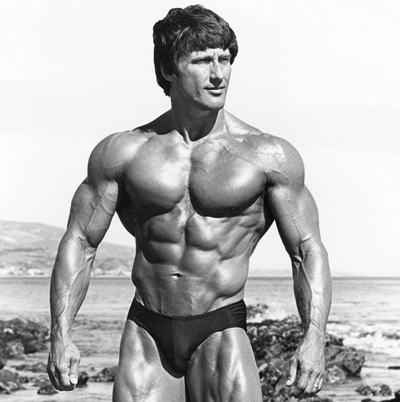
Frank followed somewhat of a low-carb diet with a reefed when prepping for a show. He kept protein at 1g/lb of bodyweight which was usually around 190-200g for him. His fat intake made up 25% of his calories and usually end up around 60g per day. In terms of calories, he never went above 3,000 and stayed mainly in the low to mid 2,000’s. His carbohydrate intake was as follows:
Days 1-3: 75g of carbohydrates
Day 4: 150+g of carbohydrates
Frank was following a more tamed refeed approach. A bunch of low days, followed by a moderate/high day. This is similar to an approach called “carb cycling,” which I wrote about here – A Review of Carb Cycling
3.) This next set-up is something I was toying with when I first started implementing intermittent fasting. There’s nothing inherently magic about IF, it’s just a more creative way to blend periods of eating/undereating. Everyone fasts every single day at some point, so it’s nothing to be up in arms about.
Day 1
- Fast day (no lifting, low intense aerobic/walking)
- coffee with a little half/half
- 2-3 BCAA or Leucine pulses during the day (not truly necessary but might help)
- 1 meal at night, 300-400 calories, 40-50g protein.
Day 2
- Fast day (no lifting, low intense aerobic/walking)
- Coffee/BCAA or Leucine in the am
- 10 hours into the day, break your “fast.”
- Eat protein first, a 30-40g shake here is fine.
- After that, start introducing some carbohydrates – oatmeal, rice, bread, fruit, something you like, but won’t go crazy on. Spend the rest of the day eating to satiety.
Day 3
- Anabolic day (you will lift on this day)
- Start the day by carbing up (with your protein too). Pancakes, oatmeal, rice, Ezekiel bread etc. Your body will rapidly uptake this glucose and then you will burn through most of it during your lift.
- Try for 2-3 meals leading up to your workout, all with carbs.
- Post-workout you have 8-10 hours to ramp up protein/calories. Aim for 200g+ of protein and some carbohydrates you enjoy. You need to consume a lot of food in this window. You are coming off of two, very low calorie days.
Day 4
- Restart all over
Closing Thoughts
Dieting is brutal, so finding ways to make it sustainable and a little less tortuous should always be a goal. A higher calorie or refeed day appears to provide a beneficial physiological effect and most certainly invokes a positive psychological one. Low energy and hunger will catch up to you at some point.
So if you’ve been dieting strictly and consistently for enough time to have lost some weight, you can start to consider the idea of a refeed. If you’re still being inconsistent and not tracking calories, don’t bother. You’ll just overeat and likely even gain weight.
I’d start with one refeed every 2 weeks and use 2x your typical carbohydrate amount. While you can technically get away with some higher glycemic, less optimal carbohydrate choices, you’re still better off picking quality sources. Enjoy.

Leave a Reply