
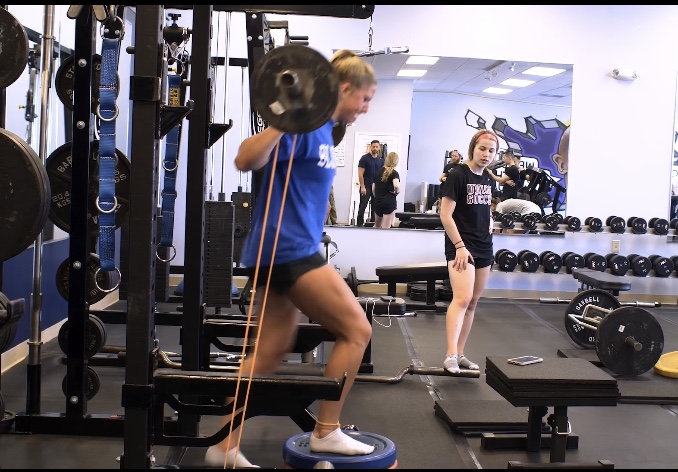
From the Ground Up – Ordering the Squat and Single Leg Progressions
Which movement do you start with? What do you do if they can’t currently tolerate it? Where do you go next?
Before I continue, I hate “ranking” movements and I often feel too many prioritize the exercise over the adaptation (which is all that matters). A year ago, Dr. Craig Liebenson emailed me and asked me to go over a list of progressions he had for different movement patterns (squat, hinge, etc.). My order below is simply based on what I’ve learned over my years of coaching. It is not set in stone and always subject to change.
Here was my response:
It’s interesting that you asked me this as I’m in the midst of reading another Feldenkrais book, so I’m really thinking a lot about learning movements.
Lists like these are tough because I think the client population, experience teaching certain movements, the coaches “favorites”/ what they’ve had success with, and history of the client, all influence what we’ll choose.
My list would likely be different than these, but I’m sure there’s sound explanations for tons of orders. So I jotted some stuff down that I might go through given I’m typically working with a wide range of people, from performance to rehabilitation.
Wasn’t sure exactly what you were looking for, so let me know if I misinterpreted it. Since I work with people in pain/rehabbing, all the way to elite athletes, I’m going to start with the absolute floor. You might normally think a bodyweight squat is the starting point, but someone with back or knee pain may not tolerate that well.
The goal then becomes finding a way to introduce this movement where the client doesn’t feel too much pain and can become more efficient at it.
For example, a general bilateral squat series might look like:
– Supported Squat – Squat to Row (provides stability, reinforces proper technique, teaches bracing, builds confidence), TRX Squat.
– Counter balance squat (arms, then mb/light load, then weight vest). Same idea, counter balance engages anterior trunk to stabilize and groove the motor pattern.
– Box Squat – I’ve written extensively on the box squat. It allows you to adjust ROM and shift to a bit more of a hinge if they can’t tolerate a traditional squat yet.
– Goblet Squat or Landmine Squat – The goblet squat is great, assuming someone has the strength in the upper back and has learned how to brace in the hole.
– Barbell Back Squat – The barbell back squat is not good or bad, it’s simply one exercise variation. I don’t believe everyone can or necessarily should use it. Fit the program to the client, not the client to the program.
– Specialty squats – Some of my favorites include, Hatfield squat to a box, SSB squat, Sissy squats.
Unilateral Series
- Supported Split Squat/Kickstand Squat – I suppose the real floor here could be banded TKE’s, unilateral leg extension, or simply any sort of flexion + iso hold; but we will start with an assisted split squat (split squat on trx, or split squat to row). A TRX assisted 30 second split squat isometric hold is a good place to start.
- Peterson step up – I like these because of how easily it is to manipulate the ROM. It can be 4 inches, or it can be 24 inches. Adjust based on the tolerance of the individual.
Eccentric Only Peterson Step Down – Watch Here
Weighted Peterson Step down – Watch Here - Leg Press – 2 out, 1 back eccentric leg press (horizontal) or traditional submaximal repetitions. I love the leg press in rehab and you could make a case for it above the peterson step down. There is a time and a place for isolated movements or machines.
- Lunge Variation – static before dynamic so Split Squat, Reverse Lunge, Lateral Lunge, Walking Lunge, Forward Step Back Lunge (Watch Here).
- 2 down 1 up, single leg box squat – Often I might use this before a split squat if that position still bothers someone – Watch Here
- Single leg squat to a box – Watch Here
- Step Up – DB, Barbell, etc. Same with the step down, you can adjust the ROM easily.
- Skater Squat and Pistol Squat – Watch Here
- Specialty Unilateral Exercises – Deficit Reverse Lunge (Watch Here), Explosive Step-Up (Watch Here

Leave a Reply