
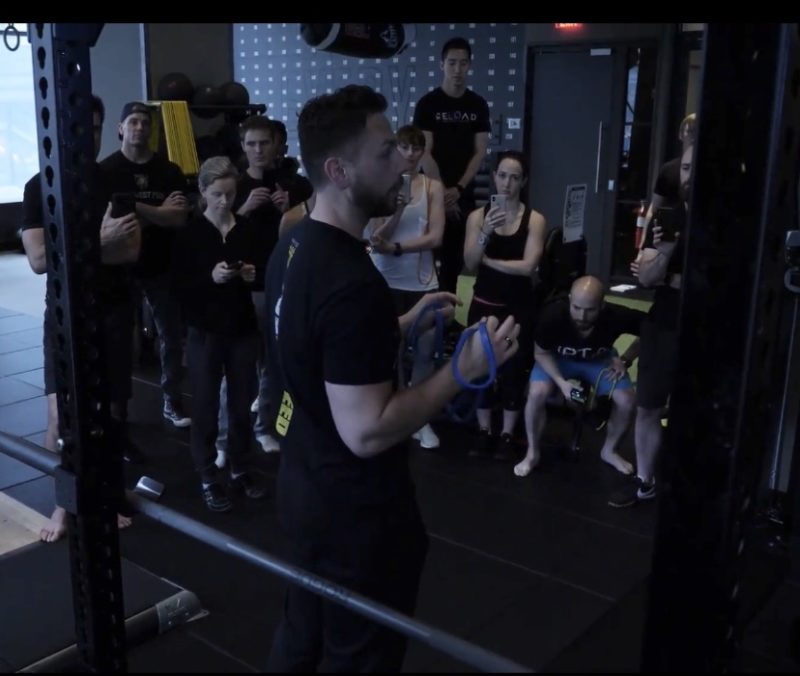
10 Training Commandments
1.) Your body will respond to any new stimulus, which means all programs technically “work.” The question then becomes which, when, and how much for optimal results? The best program is the one you’re not on. At the same time, this does not mean program hopping is the best choice. As Verkhoshansky said, “There are two ways to induce an adaptation. Increase the load/stimulus or change the drill.”
2.) Less is more. Better is better. Quality > Quantity. However you need to rationalize it. “I fear not the man who has practiced 10,000 kicks once, but I fear the man who has practiced one kick 10,000 times.” – Bruce Lee. Become exceptional at the basics, and watch your overall potential rise. Sport and training coaches always ask me about implementing a million different things in practice or the weight room. They believe complicated = better. Rather than 30 shitty sprints, how about we do 10-12 great ones?
3.) Aside from the musculoskeletal adaptations from training, it also enacts powerful changes to the brain. Strength is invigorating and it builds confidence. Reaching strength, performance, or mobility goals provides positive feedback and rewards your work ethic. Over time, this spills over into other areas of your life.
4.) You are not immediately better after what you just did (there are many different effects from one training session). The adaptation-recovery cycle is a process. Let it unfold, don’t force it. Muscles may recover within 24 hours, but the nervous system can take 48-72. For example, there will be muscle glycogen depletion after an intense anaerobic session. After a full restoration process, the glycogen level will rise (supercompensation) above the initial level. If the rest is too short, preparedness will decrease. I’ve found every other day training to be an efficient way to plan my program.
5.) The closer to get to your genetic ceiling, the less room for improvement and the more difficult your gains will be. Early on you might be able to go up 10-20lbs at a time. Once you put 10+ years in the game, you’ll be happy with 5lbs. Adding repetitions or time under tension are worthwhile endeavors too. Don’t lose sight of the big picture.
6.) Mistakes are welcomed. As Feldenkrais said, “Faults are used in improvement. Just as in any complicated process, deviations are used to help correct its progression, so in the correction of man faults and deviations should not be suppressed, overlooked, or overcome by force in any way, but used to direct his correction.” Put clients in positions to succeed AND fail. If you do a great job, they’ll be learning a new skill without even having to think about it too much.
7.) My biggest gripe with traditional PT – Accommodation (response of an organism to a constant stimulus decreases over time)! If you employ the same exercise with same training load over a long period of time, performance improvement decreases. If you keep doing wall-sits, bodyweight squats, and bosu-ball non-sense, pretty soon they’ll stall and get reinjured. Eventually they’ll find someone like me to actually get them ready for their sport again.
8.) What is Preparedness? “Ones disposition toward competition or training, varies in accordance to amount of substance available for immediate use.” Ask if they ate, how they slept, check recovery. If they just played a game or had an intense session the previous day, should you kick their ass the next day? Obviously not.
9.) Stop using exercises in the gym to determine the potential of an athlete’s competitive event. For example, by using a squat, you are trying to measure an athletes force output in a non-specific exercise that doesn’t resemble anything close to their competition movement (in terms of biomechanics). This is not to pick on the squat, just remind you that weight-lifting is general in nature for athletes.
10.) There are no absolutes. You don’t have to barbell squat. You don’t have to deadlift. This is not to discourage these exercises, rather remind you that only movement is truly necessary. Take your clients preferences into consideration when programming. More enjoyment will lead to greater adherence. Listen to their feedback and watch their body move.

Leave a Reply